


How to Choose an Indoor Playground Manufacturer for the UK & European Market
Most indoor playground and family entertainment center (FEC) projects in the UK and Europe are not lost on price. They stall — or fail — on a manufacturer relationship that could not deliver what the drawings promised: a compliant safety file, a realistic installation timeline, or support once the equipment is three years old and a part needs replacing. For an investor comparing suppliers, the real question is not "who has the nicest slide" but "who can carry this project from concept to a functioning, insurable, well-managed venue."
This guide sets out the practical criteria commercial operators, mall developers, and FEC investors use to evaluate an indoor playground manufacturer before signing a contract — design capability, safety documentation, manufacturing quality, installation management, project history, and after-sales support — along with the questions worth asking before any deposit changes hands.
Why Choosing the Right Manufacturer Matters
An indoor playground is a long-lived commercial asset, not a one-off purchase. Equipment typically stays in service for eight to fifteen years, gets inspected on a recurring schedule, and needs replacement parts, surfacing repairs, and occasional redesigns as footfall and family expectations change. The manufacturer selected at the outset effectively becomes a long-term partner, whether or not that was the intention.
Get the choice wrong and the consequences show up gradually: documentation gaps that surface during an insurance audit, a layout that never quite worked for supervision sightlines, a supplier that stops answering emails once the final invoice is paid. Get it right, and the equipment, the safety paperwork, and the ongoing relationship all support the venue's operating economics rather than working against them.
1. Evaluate the Manufacturer's Design Capability
Design is where most of a project's long-term performance is decided, long before manufacturing begins. A capable design team works through several layers of the same space:
- Concept development — translating a site, a target age range, and a commercial brief into a coherent play environment rather than a catalogue of attractions bolted together.
- Space planning and circulation — how families move through the venue, where queues form, and how the layout avoids bottlenecks at peak weekend hours.
- Age zoning — separating toddler, junior, and older-child zones so that equipment scaled for a six-year-old isn't sharing a landing zone with a two-year-old.
- Ceiling height and structural constraints — many UK and European venues occupy retrofitted retail units, warehouses, or mixed-use developments with fixed ceiling heights, columns, sprinkler layouts, and fire-escape routes that the design has to work around, not ignore.
- Visibility and supervision — sightlines for parents and staff are a design decision, not an afterthought; enclosed tube slides and multi-level structures need to be planned so supervision remains practical.
- Custom themes and narrative — increasingly, operators want a distinct visual identity rather than a generic soft-play layout, which requires in-house design and theming capability rather than a fixed product range.
- Integration of different attraction types — soft play, trampoline zones, climbing, ninja courses, and interactive/digital elements need to work as one circulation system, not as separate installations competing for the same floor space.
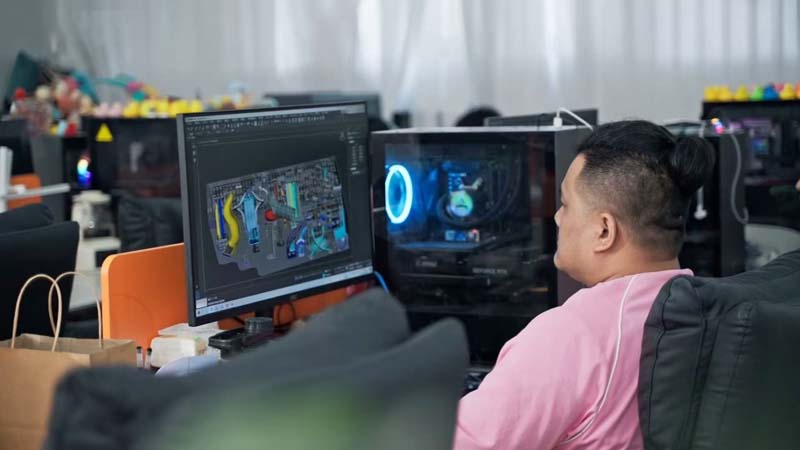
Ask to see how a manufacturer's design team has handled constraints similar to the venue in question — a low ceiling, an awkward column grid, a narrow frontage — rather than only reviewing renders of their best-case projects. Reviewing a supplier's design service process before a first call helps frame what to ask for.
2. Look Beyond the Product Catalogue
Three tiers of supplier commonly present themselves at the same trade shows, and the distinction matters more than most first-time buyers expect.
Equipment supplier
Sells standardized or semi-customized play structures from a catalogue. Design input is limited, project management is usually the buyer's responsibility, and after-sales support is transactional.
Manufacturer
Produces the equipment — potentially to custom specification — but may or may not offer design, installation, or project coordination as part of the scope. Capability varies significantly between manufacturers.
Turnkey indoor playground solution provider
Coordinates the full project lifecycle: concept and space planning, 2D and 3D design, engineering and material confirmation, manufacturing and quality control, logistics, on-site installation, and after-sales support. The buyer works with one accountable party rather than stitching together a designer, a fabricator, a freight forwarder, and an installation crew.
A catalogue can be a reasonable starting point for a very small, simple installation — worth browsing through a supplier's indoor playground product range to gauge scope. For a commercial FEC or a venue that needs to open on schedule and pass inspection on the first attempt, the coordination gap between "manufacturer" and "turnkey provider" is usually where budgets and timelines actually break down.
3. Check Safety Standards and Compliance Documentation
Safety documentation is not a formality — it is what an insurer, a local authority inspector, or a landlord will ask to see, sometimes years after installation. Before selecting a manufacturer, buyers should ask what standards and test reports apply to the specific equipment being quoted, because the applicable requirements depend on the equipment type, the venue, the jurisdiction, and the scope of the project — no single certificate covers everything.
In the UK and the wider EU market, the relevant reference points commonly include:
- EN 1176 — the European standard series covering playground equipment, including Part 10, which addresses fully enclosed play equipment such as multi-level soft-play structures, and Part 7, which covers installation, inspection, maintenance, and operation.
- EN 1177 — the companion standard for impact-attenuating surfacing, which governs how flooring and padding are tested for fall protection. EN 1176 and EN 1177 address two different things — equipment and surfacing — and both need to be satisfied; certified equipment sitting on an under-specified floor does not add up to a compliant playground.
- The EU General Product Safety Regulation ((EU) 2023/988) — in force since 13 December 2024, this acts as a safety net for consumer products, including gymnastic and children's play equipment, where no product-specific EU legislation already applies.
- Fire performance requirements for soft furnishings and upholstered play elements — in the UK, this typically means testing against standards such as BS 5852 for the ignitability of upholstered and padded elements. Requirements vary by material type and jurisdiction, so this should be confirmed against the specific venue and materials rather than assumed.
- CE marking, and UKCA where relevant — current UK government guidance allows CE-marked products across most product categories to be placed on the Great Britain market without a separate UKCA mark, though buyers should verify current guidance for their specific product category before assuming this applies, since sector exceptions exist and policy has shifted more than once since Brexit.
- ISO 9001 — not a playground-specific standard, but a relevant indicator of a manufacturer's quality management system and documentation discipline.
Ask for test reports, material documentation, and declarations of conformity for the specific equipment being quoted — not generic marketing material referencing "certified" products without naming the standard, the test body, or the scope of the test.
4. Examine Manufacturing and Quality Control
Design and paperwork only matter if the physical product matches them. Buyers evaluating a manufacturer's production capability should look at:
- Factory capability — is production self-owned, or subcontracted to third parties whose quality control the buyer cannot see?
- Production process — how components move from cutting and welding through stitching, padding, and assembly, and where quality checkpoints sit in that sequence.
- Material selection — steel gauge and coating, foam density, PVC or fabric grade, and stitching methods all affect how equipment ages under continuous commercial use, which is a very different load profile from a domestic play set.
- Quality control and inspection — whether inspection happens only at final packaging or is built into the production line, and whether the buyer can request inspection photos, video, or a third-party pre-shipment inspection.
- Packaging and export preparation — for equipment shipped internationally, packaging quality directly affects how much arrives undamaged and ready to install versus needing on-site rework.
- Documentation handover — material certificates, test reports, and assembly manuals should be organized and handed over as a package, not assembled retroactively when an inspector asks for them.
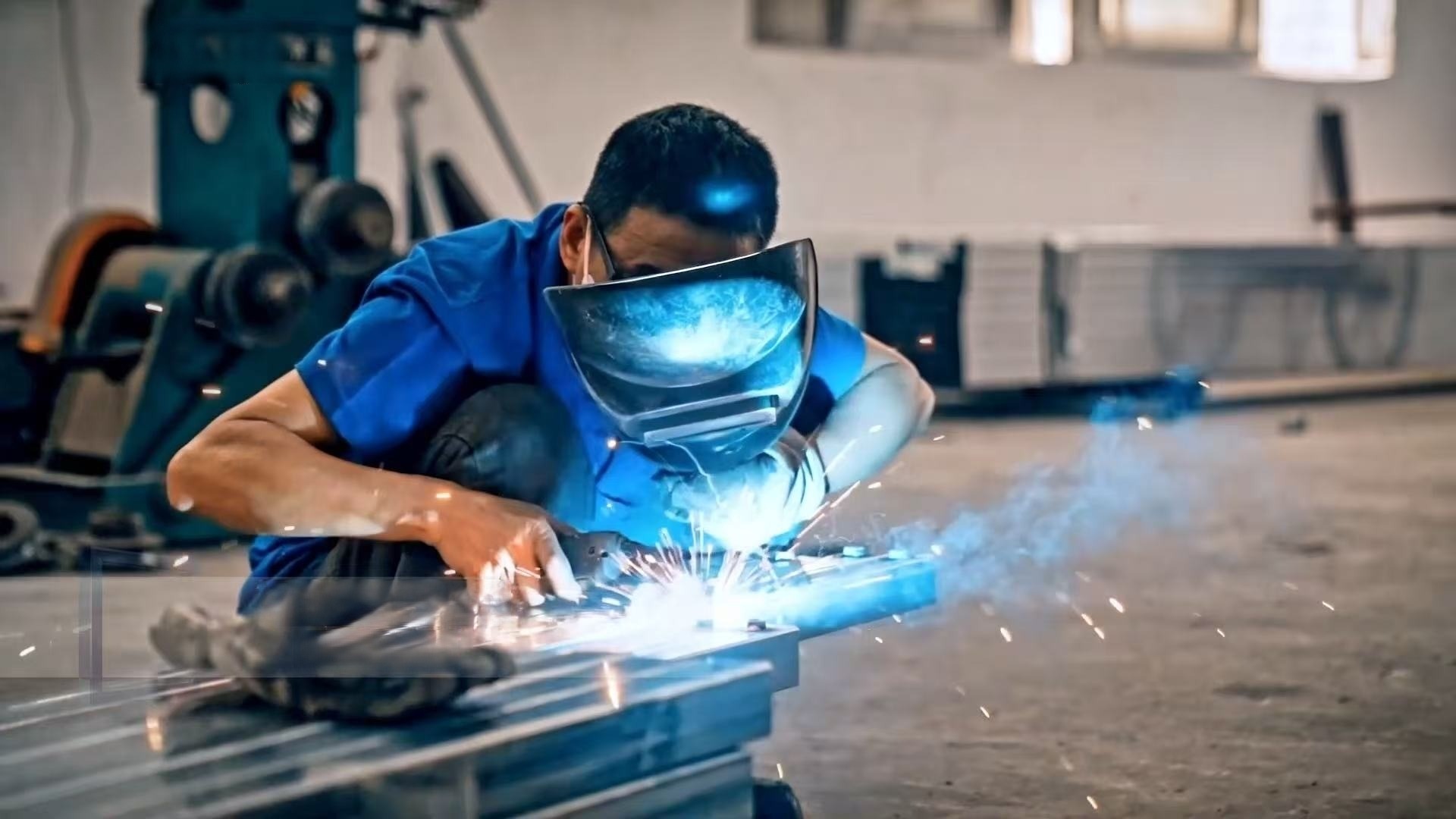
A factory visit or a live video walkthrough, where feasible, tells a buyer more in twenty minutes than a supplier's own marketing photography ever will. The About Us page of a prospective manufacturer's site is usually the fastest place to check how long the company has operated and whether production is self-owned.
5. Ask About Installation and Project Management
Installation is where a design and a set of components become a functioning, safe venue — and where a large share of project risk sits. It should be planned as part of the project from the outset, not treated as a logistics afterthought once equipment lands in-country.
Worth confirming with any prospective manufacturer:
- Project management structure — is there a single point of contact coordinating design, production, shipping, and installation, or does responsibility hand off between disconnected teams at each stage?
- Installation coordination — does the manufacturer send its own trained installation team, work through a local partner it manages, or leave installation entirely to the buyer's contractor working from an instruction manual?
- Site requirements — ceiling anchor points, floor loading, power and lighting needs, and access routes for large components should be confirmed well before delivery, not discovered on installation day.
- Commissioning — a formal check that installed equipment matches the design, meets clearance and fall-height requirements, and is ready for use before opening.
- Handover documentation — an operations and maintenance pack, including inspection schedules and spare-parts references, delivered at project completion rather than requested after the fact.
- Maintenance guidance — clear instructions for the operator's own routine inspection regime, distinct from periodic third-party safety inspections.
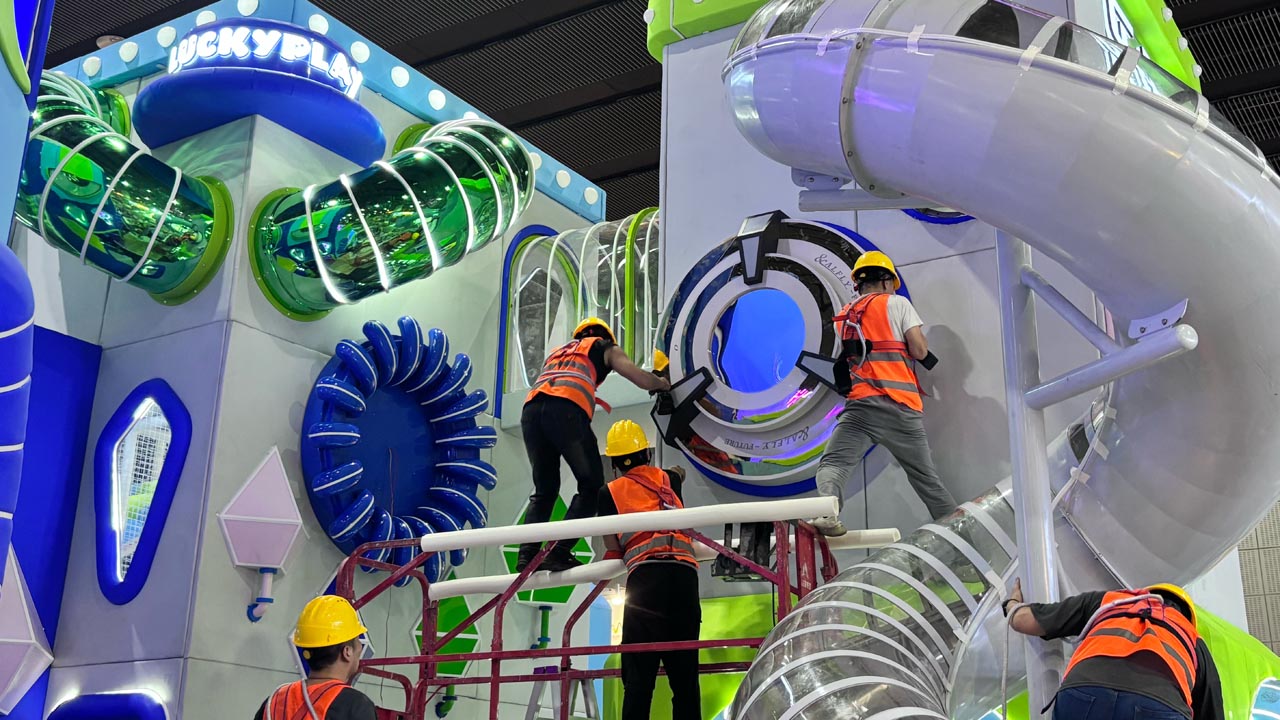
A supplier's own installation and project management page is worth reading closely for how explicitly these steps are described — vague language here often reflects a genuinely undefined process rather than an oversight in the copy.
6. Review Relevant Project Experience
A manufacturer's project portfolio is useful evidence, but only when it demonstrates relevant range rather than sheer volume. A useful portfolio review looks at:
- Projects across different venue sizes, from compact mall units to large-format FECs
- Experience across different countries and regulatory environments, not only the domestic market
- Different building conditions — new-build shells versus retrofitted existing structures with fixed constraints
- Both new-build and renovation projects, since renovating an operating venue around existing footfall is a different discipline from building into an empty shell
- A spread of age groups and play formats, rather than one repeated template
- Different commercial positioning — budget-focused venues versus premium, theme-led destinations
The number of completed projects alone is not proof of quality — a large volume of similar, formulaic installations demonstrates less design range than a smaller number of varied, well-documented projects. Ask for references from operators the manufacturer has worked with, not just photographs of finished spaces; a well-maintained project and case study archive is a reasonable starting point for that review, though it should be treated as a starting point rather than the full picture.
7. Understand After-Sales Support
The relationship with a manufacturer does not end at handover — equipment ages, parts wear, and venues evolve. Before signing, it's worth understanding:
- Replacement parts — availability, lead times, and whether components are standardized enough to source affordably years after the original installation.
- Maintenance guidance — ongoing technical support for the operator's own inspection and upkeep routine.
- Technical communication — response times and language support for a buyer based in the UK or Europe working with a manufacturer elsewhere.
- Documentation access — whether original design files, material specifications, and test reports remain accessible for future insurance, inspection, or renovation needs.
- Future expansion — the ability to extend or reconfigure an installation as the venue grows, without starting the design process from zero.
- Long-term project support — whether the relationship is structured to last for the equipment's operating life, or effectively ends once the final invoice is settled.
8. Ten Questions to Ask an Indoor Playground Manufacturer
- Which specific standards and test reports apply to this equipment, and can I see the documentation before ordering?
- Is the factory self-owned, and can I see it — in person or by live video?
- Who manages the project day to day: one point of contact, or a rotating handoff between departments?
- Do you send your own installation team, or is installation subcontracted locally?
- What is the realistic lead time from deposit to opening day, including shipping and installation?
- What documentation do I receive at handover, and in what format?
- How are replacement parts sourced once the original warranty period ends?
- Can I speak with a previous client operating a venue of similar size or format?
- How is quality checked during production, not only at final inspection?
- What happens if equipment arrives damaged or doesn't match the approved design?
Equipment Supplier vs. Turnkey Solution Provider
| Consideration | Equipment Supplier | Turnkey Solution Provider |
|---|---|---|
| Design input | Limited; mostly catalogue selection | Concept through 3D design, tailored to the site |
| Project coordination | Buyer manages separate vendors | Single accountable point of contact |
| Installation | Often the buyer's responsibility | Coordinated as part of the project scope |
| Documentation | Varies, sometimes assembled after the fact | Delivered as a structured handover package |
| After-sales relationship | Typically transactional | Structured for the equipment's operating life |
| Best suited to | Small, simple, low-complexity installations | Commercial FECs and venues with a fixed opening date |
What to Look for When Meeting Manufacturers at IAAPA Expo Europe
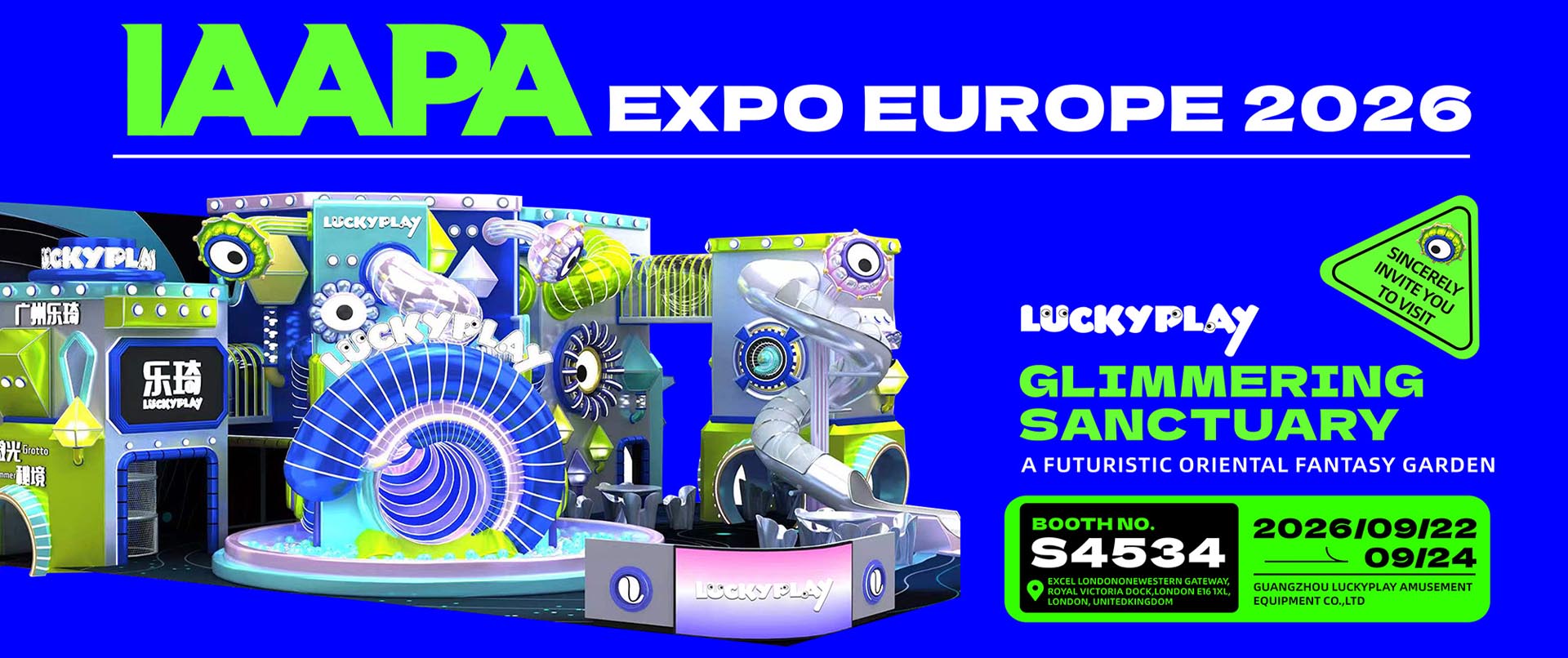
IAAPA Expo Europe 2026 runs from 21–25 September in London, with the show floor open 22–24 September at ExCeL London — the leisure and attractions industry's largest annual European gathering, bringing several hundred exhibitors and a full education program together in one venue. For buyers actively comparing indoor playground manufacturers, a trade show meeting is a useful complement to remote due diligence, but it works best when approached with a specific list rather than a general browse:
- Bring venue dimensions, ceiling height, and rough budget range so conversations move past generalities
- Ask to see documentation samples on the spot, not just promises that they exist
- Ask who on the team you would actually be working with day to day, not just who is staffing the booth
- Treat the meeting as the start of a written due-diligence process, not a substitute for it — follow up in writing and request the documentation discussed before committing
A well-prepared floor conversation can shortlist manufacturers efficiently, but contract-stage decisions should still rest on documentation, references, and factory verification rather than showroom impressions alone.
A Turnkey Approach: How Luckyplay Structures Its Projects
Luckyplay (Guangzhou Luckyplay Amusement Equipment Co., Ltd.) is a China-based indoor playground and FEC equipment manufacturer that has operated since 2008, working from a self-owned production facility and an in-house design team. Rather than functioning purely as an equipment catalogue, projects are structured as a sequence: requirements and concept discussion, 2D space planning, 3D design, engineering and material confirmation, production and quality control, logistics, installation, and after-sales support — the same sequence described in the turnkey model above. For buyers comparing manufacturers using the criteria in this guide, that project structure — and the documentation that accompanies each stage — is a reasonable basis for a preliminary conversation, whether at IAAPA Expo Europe or otherwise.
Final Checklist for Choosing an Indoor Playground Manufacturer
- ☐ Design team has handled constraints comparable to your site (ceiling height, footprint, structural limits)
- ☐ Scope is clearly defined as equipment-only, manufacturing, or full turnkey delivery
- ☐ Relevant safety standards (EN 1176 / EN 1177, applicable fire and GPSR requirements) are named and documented for your specific equipment
- ☐ Factory can be viewed, in person or by live video
- ☐ A single project manager is named as your point of contact
- ☐ Installation approach — own team, managed local partner, or buyer-managed — is confirmed in writing
- ☐ Handover documentation package is defined before the contract is signed
- ☐ At least one comparable reference project and client contact is available
- ☐ Replacement-parts and after-sales process is explained, not just promised
- ☐ Timeline from deposit to opening day is realistic and includes shipping and installation, not just production
Frequently Asked Questions
How do I choose an indoor playground manufacturer?
Evaluate design capability, safety documentation, manufacturing quality, installation and project management, relevant project experience, and after-sales support — in that order — rather than starting from price or catalogue appearance alone.
What should I ask an indoor playground supplier?
Ask for specific test reports and standards documentation, factory visibility, a named project manager, the installation approach, handover documentation, and a reference client operating a comparable venue.
What safety standards should an indoor playground meet in Europe?
EN 1176 (equipment) and EN 1177 (surfacing) are the principal European playground safety standards, alongside the EU General Product Safety Regulation as a safety net, and applicable fire performance requirements for soft furnishings. Which specific parts and requirements apply depends on the equipment type, venue, and jurisdiction.
What is the difference between an equipment supplier and a turnkey playground provider?
An equipment supplier sells products, often from a catalogue, with limited design or project coordination. A turnkey provider manages the full project — design, engineering, manufacturing, logistics, installation, and after-sales support — as one accountable process.
How much customization can an indoor playground manufacturer provide?
This varies widely by manufacturer. Capability ranges from selecting catalogue modules in different colors to fully custom-themed environments designed around a specific site and brand concept — ask to see the design team's range of past custom work, not just their standard product line.
Can a manufacturer renovate an existing indoor playground?
Many manufacturers that handle new-build turnkey projects also handle renovations, but renovating a live venue around existing structural constraints and continued operations is a distinct discipline — ask specifically for renovation project references, not only new-build examples.
What documents should I request before purchasing playground equipment?
Test reports and standards documentation for the specific equipment, material certificates, a declaration of conformity, installation and maintenance manuals, and — for turnkey projects — a defined handover documentation package.


